
 Send Inquiry
 Call Us:- 08045803643




 Send Inquiry
Furnace Oil 180
Price 58.0 INR/ Kilograms
MOQ : 1000 Kilograms
Furnace Oil 180 Specification
- Application
- a residual fuel (motor spirit / gasoline, high speed diesel and kerosene are distillate fuels). It is a dark, viscous liquid at room temperature. It is a complex mix of hydrocarbons with carbon atoms ranging mainly from 20 to 55. It is produced by blending residues from various refinery processing units and diluting with middle distillates.
- Type
- Furnace Oil
- Use
- Furnace Oil is a residual fuel (motor spirit / gasoline, high speed diesel and kerosene are distillate fuels). It is a dark, viscous liquid at room temperature. It is a complex mix of hydrocarbons with carbon atoms ranging mainly from 20 to 55. It is produced by blending residues from various refinery processing units and diluting with middle distillates.
- Density
- 0.96 Kilogram per cubic meter (kg/m3)
- Pack Type
- IN BERREL
Furnace Oil 180 Trade Information
- Minimum Order Quantity
- 1000 Kilograms
- Payment Terms
- Cash on Delivery (COD), Cash Advance (CA), Cash in Advance (CID), Cheque
- Supply Ability
- 100 Kilograms Per Day
- Delivery Time
- 48 Hours
- Sample Available
- Yes
- Sample Policy
- Free samples available with shipping and taxes paid by the buyer
- Main Export Market(s)
- Asia
- Main Domestic Market
- All India
- Certifications
- ISO 9001:2008 Certified
Furnace Oil 180 About
Shaikh Petroleum supplier of Furnace Oil,Furnace Oil is a fraction obtained from petroleum distillation, either as a distillate or a residue. Broadly speaking fuel oil is any liquid petroleum product that is burned in a furnace or boiler for the generation of heat or used in an engine for the generation of power, except oils having a flash point of approximately 40 C (104 F) and oils burned in cotton or wool-wick burners. In this sense, diesel is a type of fuel oil. Fuel oil is made of long hydrocarbon chains, particularly alkaline, cyclo-alkaline and aromatics. The term fuel oil is also used in a stricter sense to refer only to the heaviest commercial fuel that can be obtained from crude oil i.e. heavier than gasoline and naphtha.Furnace Oil isa residual fuel (motor spirit / gasoline, high speed diesel and kerosene are distillate fuels). It is a dark, viscous liquid at room temperature. It is a complex mix of hydrocarbons with carbon atoms ranging mainly from 20 to 55. It is produced by blending residues from various refinery processing units and diluting with middle distillates.SPECIFICATIONFurnace oil in the current marketing range meets Bureau of Indian Standards Specification IS : 1593 1982 for fuel oils, grade MV2.VISCOSITYViscosity is the most important characteristic in the furnace oil specification. It influences the degree of pre-heat required for handling, storage and satisfactory atomization. If the oil is too viscous it may become difficult to pump, burner may be hard to light and operation may be erratic. Poor atomization may result in the carbon deposits on the burner tips or on the walls. The upper viscosity limit for furnace oil is such that it can be handled without heating in the storage tank is excepting under server cold conditions. Pre-heating is necessary for proper atomization.SAFETY INFORMATIONReactivity Data Chemically stable and incompatible with strong oxidizers. Does not React vigorously with common materials but can react with oxidizing agentsHealth Hazard Data Routes of entry may be through inhalation/ ingestion/ skin/ eye.EFFECTS OF EXPOSURE / SYMPTOMSIngestion may cause spontaneous vomiting, irritation of mouth throat and gastro intestinal tract.On prolonged exposure it makes skin dry, erythema oil acne, development of warty growths which may lead to skin cancer, skin cracking and contact dermitites. As it is handled at a high temperature, skin contact could produce burns.On exposure to eye it may cause light to moderate irritation.Ingested do not induce vomiting as it may lead to chemical pneumonitis. Remove contaminated clothing immediately and wash affected area with water and soap. If eyes are affected, irrigate liberally with copious amounts of water and seek medical advice.IS 1592-1982Requirements for furnace Oils (Fuel Oil) (Clause 3.3) No. Characteristic Requirement forGrade MV2 Method Of Test 1. Acidity, Inorganic Nil P : 2 2. Ash Percentage by Mass (Max) 0.1 P : 4 (Method A) 3. Gross, Calorific Value Not limited, but to be reported P : 6 (for ref.) andP : (for routine) 4. Relative density at 15/15C Not limited, but to be reported 5. Flash point, Pensky martens (closed)(Min) 66oC P: 21 6. Kinematic viscosity in centistokes at 50 C, Max 180 P: 25 7. Sediment, percent by mass (Max) 0.25 P: 30 8. Sulphur, total, percent by mass (Max) 4.0 P : 33 (for ref.) andP : 35 (for routine) 9. Water content, percent by volume (Max) 1.0 P: 40FAQs of Furnace Oil 180:
Q: What is the density of Furnace Oil 180?
A: The density of Furnace Oil 180 is 0.96 Kilogram per cubic meter (kg/m3).Q: What is the pack type for Furnace Oil 180?
A: Furnace Oil 180 is packed in barrels.Q: What type of fuel is Furnace Oil 180?
A: Furnace Oil 180 is a residual fuel, unlike distillate fuels such as motor spirit/gasoline, high-speed diesel, and kerosene.Q: What is the appearance of Furnace Oil 180 at room temperature?
A: Furnace Oil 180 is a dark, viscous liquid at room temperature.Q: What is Furnace Oil 180 made of?
A: Furnace Oil 180 is a complex mix of hydrocarbons with carbon atoms mainly ranging from 20 to 55. It is produced by blending residues from various refinery processing units and diluting with middle distillates.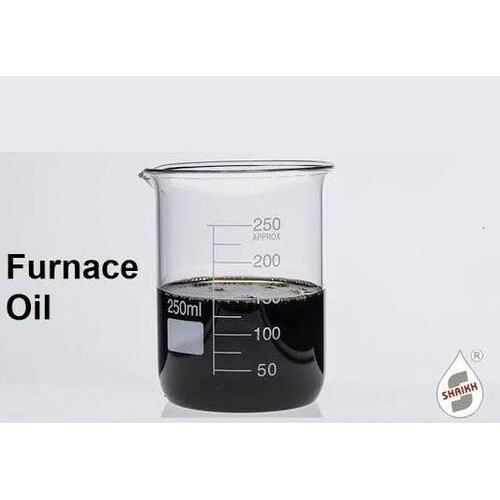
Tell us about your requirement

Price:
Quantity
Select Unit
- 50
- 100
- 200
- 250
- 500
- 1000+
Additional detail
Mobile number
Email

More Products in Light Diesel Oil Category
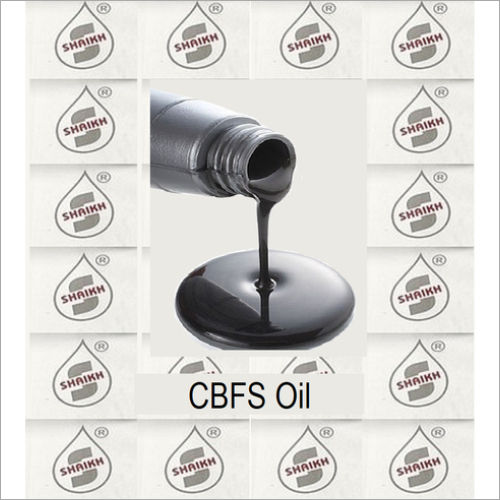
CBFS Fuel Oil
Price 78.5 INR / Kilograms
Minimum Order Quantity : 1000 Kilograms
Density : 1.0 Kilogram per litre (kg/L)
Pack Type : Barrel Tanker
Color : Black
Type : CBFS Oil
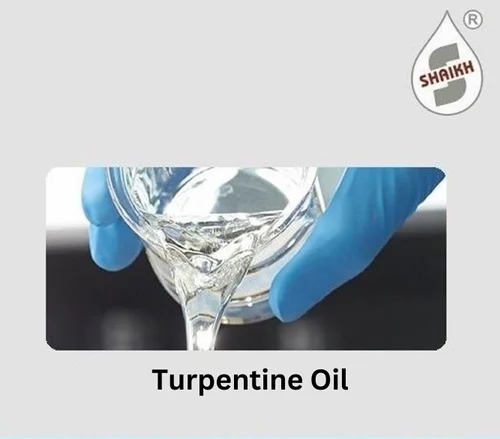
Turpentine Oil
Price 119.0 INR / Kilograms
Minimum Order Quantity : 1000 Kilograms
Density : 0.78 Kilogram per litre (kg/L)
Pack Type : Barrel Tanker
Color : Water White
Type : MTO
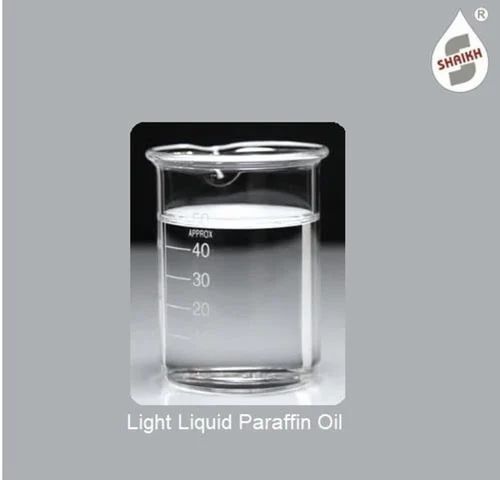
Light Liquid Paraffin (LLP)
Price 134.0 INR / Kilograms
Minimum Order Quantity : 1000 Kilograms
Density : 0.82 Kilogram per litre (kg/L)
Pack Type : Barrel Tanker
Color : Water White
Type : LLP
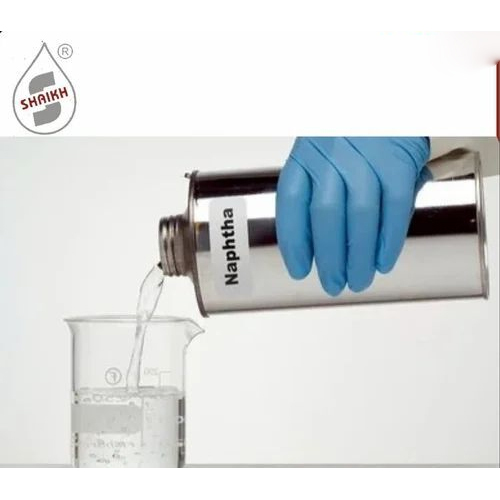
Naphtha Liquid
Price 83.0 INR / Kilograms
Minimum Order Quantity : 1000 Kilograms
Density : 0.72 Kilogram per litre (kg/L)
Pack Type : Barrel Tanker
Color : Water White
Type : Naptha

SHAIKH PETROLEUM
GST : 24ALDPS4196B1Z6
GST : 24ALDPS4196B1Z6
Contact Details

- Reg Office: 11,12,13, Old Colony, Near Valia Crossing, GIDC Industrial Estate,Ankleshwar - 393002, Gujarat, India
- Phone :08045803643

- Mr Vahid Shaikh (Manager)
- Mobile :08045803643
- shaikhpetroleum@gmail.com

|


 Send Inquiry
 Send SMS
SHAIKH PETROLEUM
All Rights Reserved.(Terms of Use)
Developed and Managed by Infocom Network Private Limited.
Developed and Managed by Infocom Network Private Limited.

